Assumptions
The working case represents a four-person habitat over 8,760 hourly intervals with six connected resource layers and a defined supply portfolio.
 Contact
 Report 02 · Project Artemis
A coupled study of electricity, water, oxygen, hydrogen, carbon dioxide and heat for a four-person lunar habitat.
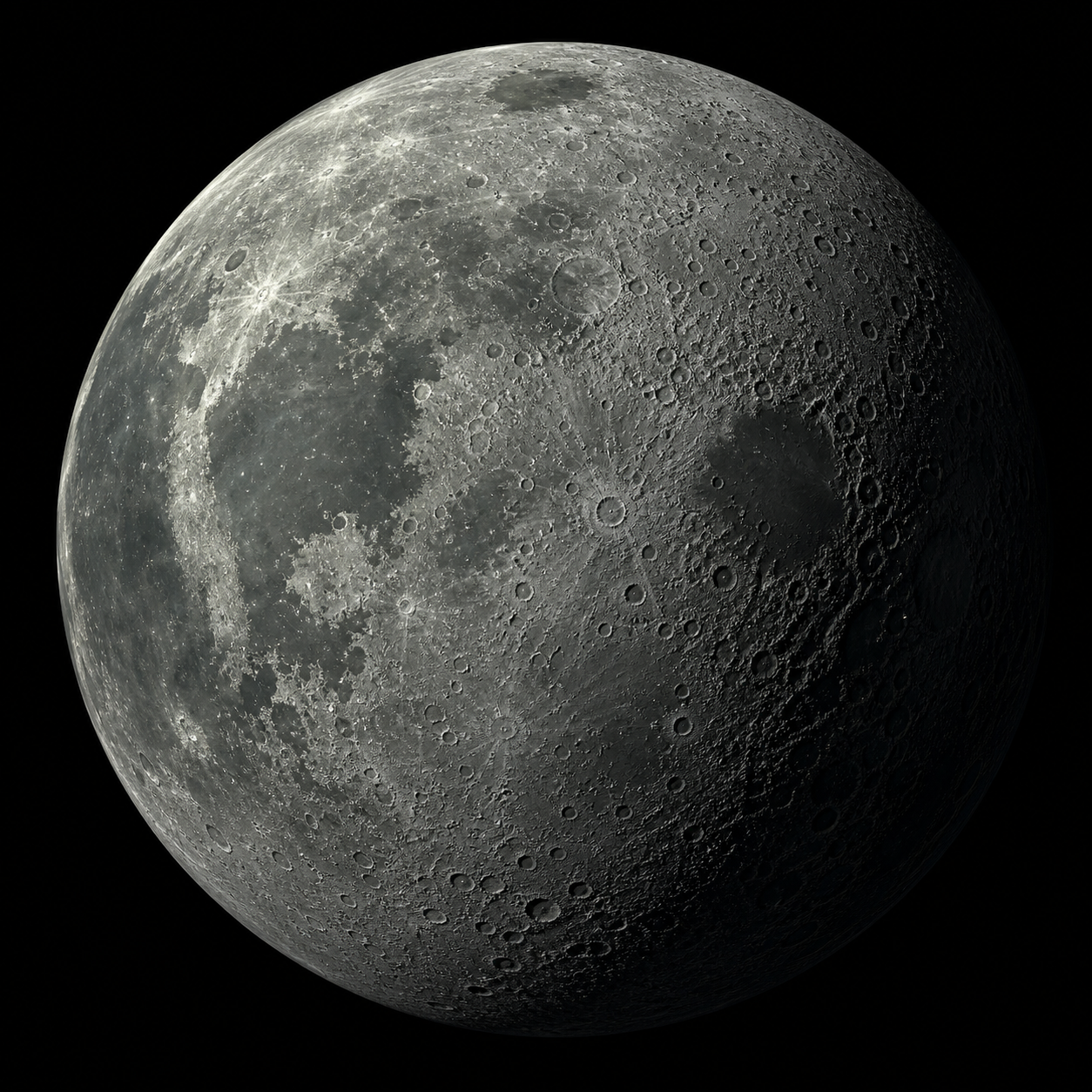
Working study
The study connects mission demand, generation, conversion, storage and life support over a full model year. The public interface combines the report with model records and solved time-series data.
Flow observatory
Methodology
The working case represents a four-person habitat over 8,760 hourly intervals with six connected resource layers and a defined supply portfolio.
Solved series, resource balances and data cards describe the current binary solution. They are not a mission guarantee or a certified engineering design.
Engineering references and source notes are exposed in the Artemis microsite. NASA and ESA references are used where relevant; the study boundary remains explicit.
Suggested citation: Terajoule (2026), Project Artemis: A habitat is a system, working digital study.
Study interface
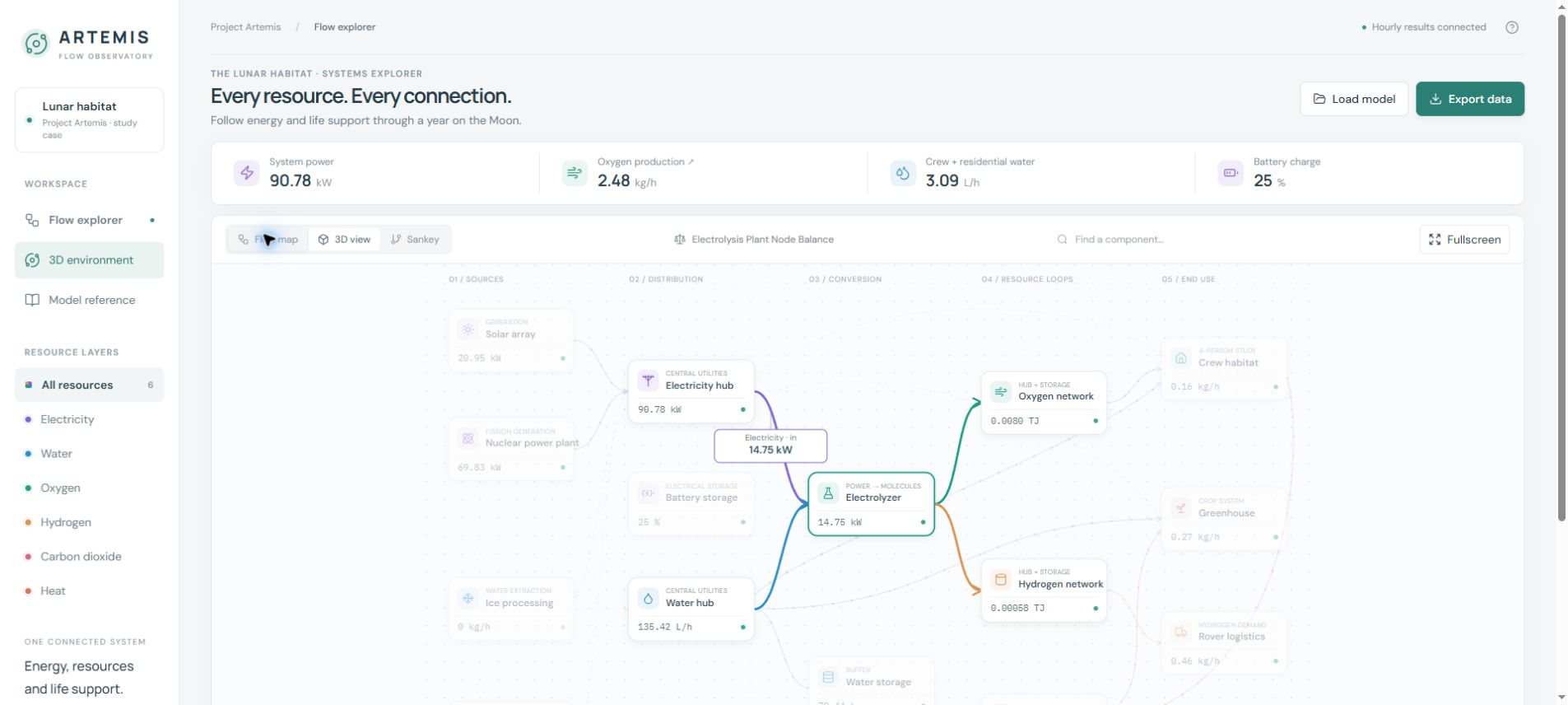
Select an asset or connection to trace the flows entering and leaving it across electricity, water, oxygen, hydrogen, carbon dioxide and heat.
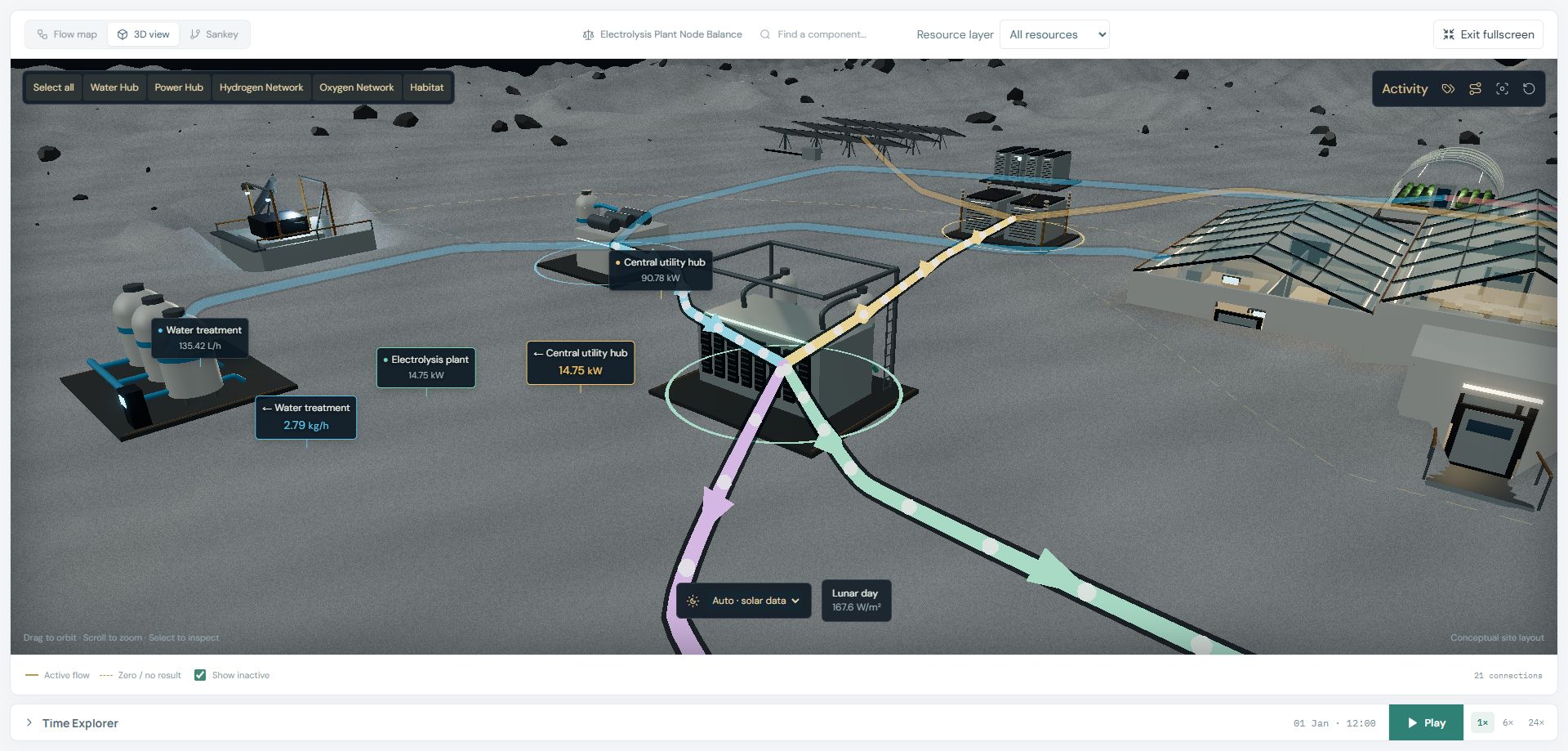
Place the same assets and live flows in a spatial view of the lunar habitat, with equipment, resource overlays and hourly conditions kept in context.
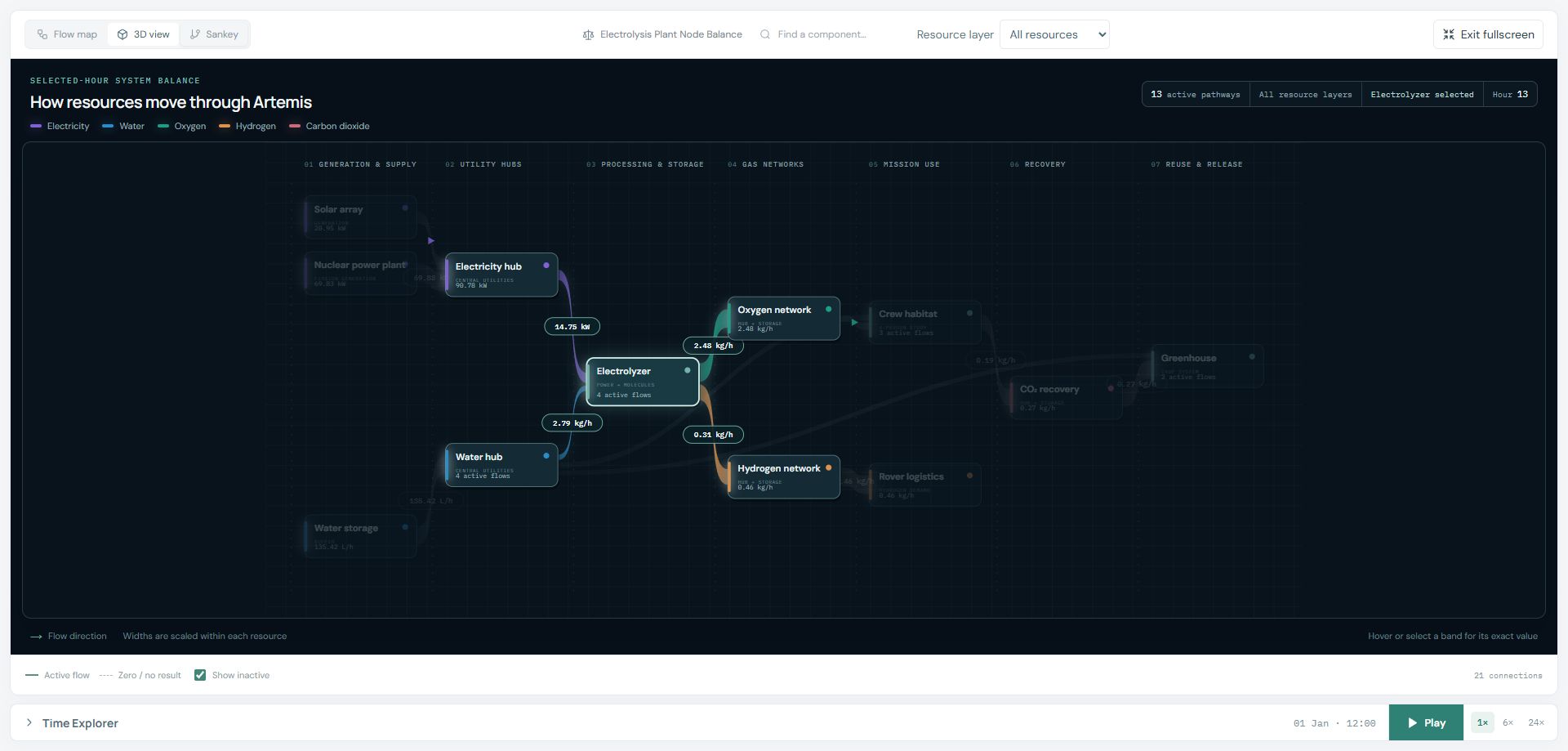
Read the balance of active pathways at the selected hour, with each band scaled within its resource and linked back to the selected object.
Searchable records keep model objects, properties, assumptions and source notes close to the charts.
Publication boundary
Zero represented shortage is a model result under the current assumptions. It does not prove mission resilience. Oxygen surplus, crew-water assumptions, rover duty cycles and stress scenarios still need to be reviewed before the study is released.